Branding
Nov 02, 2026
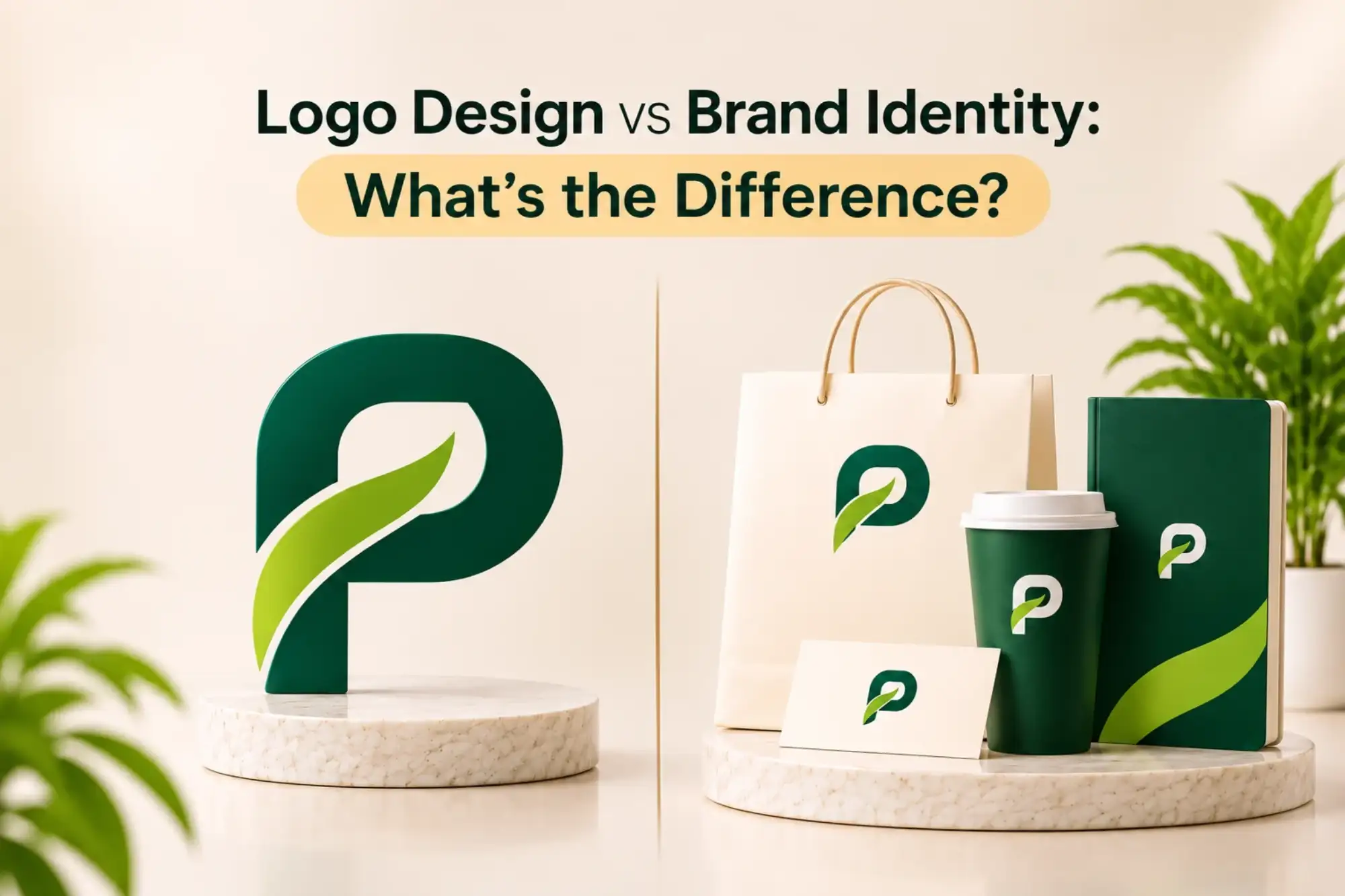
Ever seen a business brand and said to yourself, “That's their logo?” You are not alone. It's a common mistake many business owners make, using the terms "logo design" and "brand identity" as if they're synonymous. But are these two the same thing?
The answer is simply: no. While comparing logo design with brand identity, it is significant to note that a logo is one of the many components. Your logo helps people recognize your business, and your brand identity helps create a consistent look and feel throughout your customer's touchpoints.
So, do you require merely a logo or a full brand identity? Let's get to know the difference.
A logo is one graphic element, and the brand identity is a more comprehensive set of visual elements, including colors, typography, imagery, layout, and guidelines.
What is logo design?
Consider some brands you can identify on a dime. Which of the following comes to mind first? It's most likely their logo.
Logo design is the process of creating a visual identification of a business, product, or organization. Can be a symbol, a wordmark, an icon, or a combination of these. Identification and recognition are the primary uses of a logo.
An effective logo is catchy, meaningful to the brand, and adaptable to various mediums. It can be seen on the internet, social media, product packaging, business cards, ads, or signboards.
First, however, there's a critical question: Can a logo alone define what the team posts on social media, website pages, ads, and packages look like?
The answer is no. That is where the importance of brand identity design comes into play.
What is brand design?
Brand identity design is all the visual system that aids a business to remain consistent. Your logo is one of the components of this system; it is not the only component.
A full brand identity can be comprised of:
Color scheme and variations of it. Color scheme and variations of it.
Brand color palette
The choice of typeface and style. The font used and font types.
Elements of graphics and patterns
The look of the photographs or illustrations.
Layout direction
Brand guidelines
Writing tone and writing style
Together, these elements ensure a cohesive brand experience. Can your customer identify that it is a business post they are viewing if it doesn't have your logo? If you answered yes, then you are doing a good job with your visual identity.
Fact Check: A brand identity system contributes to consistency in website design, social media, packaging, signage, and business communication.
A logo identifies the business; a complete identity makes every communication material have a connected look. If there are no guidelines, then various designers and various teams may be using a different color, font, layout, and visual style. With the passage of time the brand may start to become inconsistent. That's the reason that companies that are expanding on a number of platforms may require more than just logo design.
The simple difference between logo design and brand identity
Let's help our customers understand logo design vs. brand identity!
Visualize your brand as a person. Your logo can be similar to their signature. It has a recognizable mark that marks them out. However, your brand identity is similar to their entire look and demeanor, their style, colors, impression on others, and how easily they can be identified as your brand.
A logo is a response to the question: “Who is this?”
A brand identity is an answer to the question “What does this brand look and feel like?”
They both mean a lot, but they're for different things.
What is visual branding?

Do customers know you if you don't have a logo on your site? It's here that a robust visual brand can be of help.
Visual branding is a means of combining colors, typography, imagery, graphic elements, and layouts to form a visual identity. If they are used on a regular basis, customers start to equate that new style with your company.
For instance, consider here one brand choosing distinctively different colors and fonts for each of their social media posts. A second business has a consistent graphic theme throughout their website, ads, packages, etc., and social media. Which one will appear more organized and recognizable?
The second one would be a favorite option for most people.
Consistency doesn't necessarily mean everything has to be the same. Rather, it involves making sure that all designs sound like one brand and sound the same.
But what about corporate identity?
One of the other terms that businesses hear a lot about is corporate identity. Does it differ from brand identity?
"Corporate identity" is a term for how an organization gets its identity across its visual and communication systems. Can encompass logos, stationery, business papers, communication approaches, and more branded papers.
In bigger companies, corporate identity can be used to produce uniformity throughout departments, locations, and channels of communication. The concept may vary from organization to organization but is essentially the same, making a clear and consistent representation of the business..
Need a logo or a full-on brand identity?
This will vary depending on your business phase and needs.
For a new business with low demand for communication, a solid logo and general visual direction may be the initial needs. But, when you're producing content daily, launching new products, running campaigns, designing packaging, and expanding your brand to multiple platforms, a full brand identity design can offer more consistency.
Create a brand that is recognizable
The difference between logo design and brand identity will help the business take more effective branding decisions. A logo is a recognizable mark for your business, and a brand identity is the total visual system that helps you to communicate your business consistently.
Brands N' Codes offers businesses a possible option that combines the elements of design, identity, and communication into a strategic branding solution. As one of the leading branding companies in India, Brands N' Codes specializes in developing brand identities that enable businesses to convey their message and establish a unique brand identity.

Related Articles
Branding
Oct 12 , 2026
Branding agency in kerala: services businesses need
Branding
August 13, 2026