

Package Design
Feb 17, 2026

First impressions always sell. A customer judges your product before even reading your tagline or glancing at your price, and it's solely by your
package design. Your packaging is your silent salesperson on a crowded shelf or in a scrolling marketplace. A great product can be unnoticed just because your package design is bad.
There are numerous brands that spend a lot of money on marketing without paying attention to the strength of strategic package design. The result? Disoriented customers, poor conversions, and poor brand recall. We will now consider the most prevalent mistakes with packaging design and how to evade them.
Ignoring brand identity
The inconsistency is one of the largest brand packaging errors. However, your packaging must convey your brand personality at first sight.
When your brand is high-end, then your package design has to be sophisticated. In case your brand is green, your images and materials must reflect sustainability. Random fonts, choice of colors, and inappropriate logos bring about confusion.
An excellent package design coincides with:
- Brand colors
- Typography
- Logo placement
- Tone of communication
Customers need to identify with your brand even before reading the name when they see your product.
Overcrowding the design
More information doesn't translate to better communication. Most brands attempt to cram all the features, offers, claims, instructions, and awards on the pack. This results in bad package design, which overloads customers.
White space is utilized well in a good package design. It brings out what is important, like:
- Product name
- Key benefit
- Brand logo
- Essential details
Aspects of simplicity enhance trust and readability. When customers cannot learn about your product in 3 seconds, you are losing customers.
Importance of packaging material
The design must be appealing to the eyes of the audience, and it should be printed on low-quality paper! A cheap choice of package material also destroys brand perception. Low-cost packaging is a poor message for a high-quality product.
Material choice impacts:
- Product protection
- Customer experience
- Environmental impact
- Brand value
The choice of materials is one of the greatest errors of the packaging design that can be made easily without proper attention or by choosing a cheap material. Rather, trade off price, prioritize performance, and brand position.
Impact of bad typography and legibility
Effective package designing significantly depends on typography. Little fonts, ornamental writing, or even poor contrast between text and the backdrop make it harder to read.
Customers are expected to read without difficulty:
- Ingredients
- Expiry date
- Usage instructions
- Product benefits
Mistakes in packaging design are mostly done when there is more emphasis on style than clarity by the brands. Always keep in mind that pretty incomprehensible packaging does not serve its purpose.
Neglecting preferences of the target audience
It is important that your design of the package should address your target audience. What is appealing to teenagers might not be appealing to the professionals. The things that work in the urban market might not appeal to the rural customers.
Before you make your package design, you should inquire:
- Who is buying this product?
- Which style of visual appeal do they like?
- What is their comfort range of prices?
Most of the brand packaging errors occur due to the fact that the brands make a design that is geared towards the brand rather than the customer.
Failure to account for shelf impact
Your product is competing with tens of other alike products in the retail setting. When your package design is just another part of the background, then it does not exist.
To stand out:
- Use bold yet relevant colors
- Develop a powerful visual hierarchy.
- Make sure the logo is seen from a distance.
- Prefer to use different shapes.
Ineffective package design is usually attractive on the screen but not on shelves. Always use the packaging in a real-life situation.

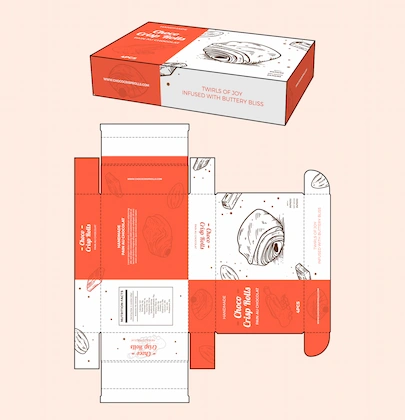
Absence of emotional connection
Customers make purchases out of emotion and rationalize them out of logic. The package design must stimulate emotions; you might be thinking of trust, excitement, luxury, freshness, or comfort.
For example:
- Soft colors for skincare
- Daring colors on energy products.
- Natural textures of organic brands.
The failures in the packaging design are usually committed when the brands pay too much attention to information and not to emotional narrative.
Ignoring functionality
Using a package that is nice to look at but hard to open, keep, or reseal causes frustration. Effective package design includes functionality.
Ask yourself:
- Is it easy to open?
- Is it easy to carry?
- Is it spill-proof?
- Can it be reused?
Inconvenience is permanent with the customers. And repeat purchases are influenced by that memory.
Not to point out unique selling points
When you have a good product, and you do not put your package design in a way that it can convey its benefits, you are losing out.
For example:
- “100% Organic”
- “No Added Sugar”
- “Dermatologically Tested”
- “Made in India”
These ought to be brought to attention. Discovery of essential selling points with small texts is one of the typical mistakes in the packaging design.
Not updating outdated designs
Markets evolve. Trends change. The expectations of customers change. When your package design is out of date, the customers might think that your product is out of date as well.
Refreshing packaging:
- Improves brand relevance
- Attracts new customers
- Creates renewed interest
And there's something a brand needs to remember always, while you update your package design, retain essential brand components in order to not lose profile. The new design should always feel like an update, not as an entirely new thing where the customer has nothing to relate to.
Ignoring sustainability
Modern consumers are more aware. The surplus plastic, superfluous strata, and things that cannot be recycled hurt the brand image.
Sustainable package design:
- Lessens environmental effect.
- Builds trust
- Improves brand perception
Avoiding eco-friendly alternatives is one of the new brand packaging errors that is increasing, and which has a lot to pay.
Failure to test before launch
Simple testing would have prevented many mistakes made in the design of packaging.
Before mass production:
- Test print quality
- Check colour accuracy.
- Review spelling and grammar.
- Carry out small consumer surveys.
Even a small mistake in typing or design can bring a huge brand betrayal.
Noncongruent online and offline packaging
As e-commerce is developing at a very fast pace, your package design should be attractive on the physical as well as the digital front.
Online shoppers see:
- Product thumbnails
- Close-up images
- Unboxing videos
The packaging is not photogenic or clear in tiny previews, which impacts the clicks and the conversions.
Copying competitors
It might be tempting to copy competitors, and in the process, you become one among the crowd and don't have any differentiation of your own. Unless the package design that you adopt is something that is different, customers will not remember you. Powerful package design is always determined by uniqueness.
Not thinking about the unboxing experience
The marketing now involves unboxing. Customers post their experience on social media and intelligent design makes customers curious and they eventually share their new experience, which obviously is a free promotion for your brand.
Small touches like, thank-you notes, custom inner prints, brand message with wrapping protection etc. is capable of enhancing brand recall and loyalty.
Conclusion
Your package is not just a container or box. It consists of a brand statement, a marketing tool, and a touchpoint to the customer experience. Simple attention and avoiding common package design errors can make the brand visible, sell more, and gain brand integrity dramatically.
Errors in package design makes customers driven out whereas strategic and creative design results in customer retention and recognition.
For a brand looking for packaging that will not only look nice but also sell, we could do the job. Our designers at Brands N’ Codes understand how to design a powerful package design that will match your brand, make an emotional connection with your audience, and thrive in a competitive environment.