

Package Design
Feb 24, 2026

Your product has seven seconds to make a first impression. Yes this is true, because the world is moving at 10x speed and a seven second is even more for a customer to pay attention to your product. The consumers browse a thousand products a day. And if your box is a box, you are already invisible.
The package design in the contemporary time is no longer for the sole purpose of securing the contents of the package but for being the loudest silent representative of the brand. The product's wrapping process is going through a radical transformation starting with the textures that meet the fingertips of a customer and the digital secrets concealed in a label. Be it a start-up or an established giant, knowing these changes is the trick to remaining on the shelf and at the heart of the consumer.
The emergence of environmentally friendly packages
The era of an environmentally friendly, plain brown cardboard box is long gone. Sustainable packaging is now a premium design option that implies luxury and sustainability. There is a shift of the brands towards the concept of circularity whereby all components of the pack, including the soy-based inks and the compostable films, are supposed to disappear in the earth or recycling bin without leaving any trace.
The way web development contributes to the growth of the business
It is not only a change in ethics but also survival. Gen Z and Millennials are new consumers who are voting with their wallets. Using materials such as mushroom wrapping or seaweed plastics, the brands will decrease their carbon footprint, reduce shipping expenses through lightweighting, and develop trust on a level that cannot be purchased with regular plastic. It transforms a normal acquisition into a declaration of common beliefs.
Discovering power in the less is more philosophy
Minimalist designs grab attention more than a cluttered design. This cuts the noise of the supermarket aisle. Premium quality and honesty can be conveyed by a brand through the extensive use of negative space, a small number of colors, and single, large-scale typography.
The benefits of minimal design packages:
- Limited design attracts at a glance in congested shelves.
- The definite layout allows the customers to know what the product is about.
- Single image designs generate a high-quality brand image.
- Constant low branding enhances recollection.
- Fewer elements in the design make it cheaper to produce.
- Clean packaging creates trust and transparency.
Is simple design actually useful to sell products?
Absolutely. This is because when a package is not overloaded with 15 fonts and starbursts that are explosives, the brain of the consumer will perceive the benefits of the product at a faster rate. Minimalism provides a sense of zen to the shopper and comes to imply that the product within is pure, of high quality, and does not have anything to hide. It also simplifies production because a few colors and simpler structures can also result in lower printing costs.
Making the box an experience
Unboxing is now a viewing event around the world, and interactive packaging is the leading performer. Brands are currently creating containers that not only contain a product but also play games, narrate stories, and even transform.

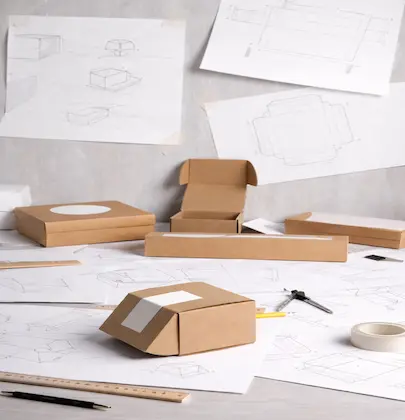
Importance of interactive packages to enhance the brand
Interactivity converts a passive customer into an interactive customer. It is an emotional engagement, whether it is a wine label that rips open to have a secret comic strip inside or a cereal box that folds into a VR headset. The more time a customer touches and plays with your package design, the higher the chances that he or she will remember the brand and broadcast his experience on the social network, which will provide you with free organic marketing.
The intellect of the modern title
We are moving into the era of the thinking box. Smart labels are closing the distance between the tangible and the digital, and they do so with the help of such technology as NFC (Near Field Communication), RFID, and sophisticated QR codes that offer real-time information.
Smart labels matters more
Such labels do not only give access to a website; they also provide openness and security. Smart sensors used in the food and pharmaceutical industries have the capability of altering color in case a product has undergone inappropriate temperature. They serve as a digital authentication of authenticity in the fight against counterfeiting of luxury goods. It can be as deceptive as a bottle scanned to identify a specific farm where their ingredients were produced, which to an average shopper translates into an incredibly potent tracking and consumer reassurance tool.
The future of the shelf
The most successful contemporary brands are those that consider their package design to be an integrated system. They blend the minimalistic design with the high technology of smart labels, and all of it is packed in the sustainable pack. This distinguishes your products between being a commodity and being a keepsake souvenir. The brands that emerge victoriously in the future will be the ones that understand that the box is not a container; it is the opening of the user experience.